
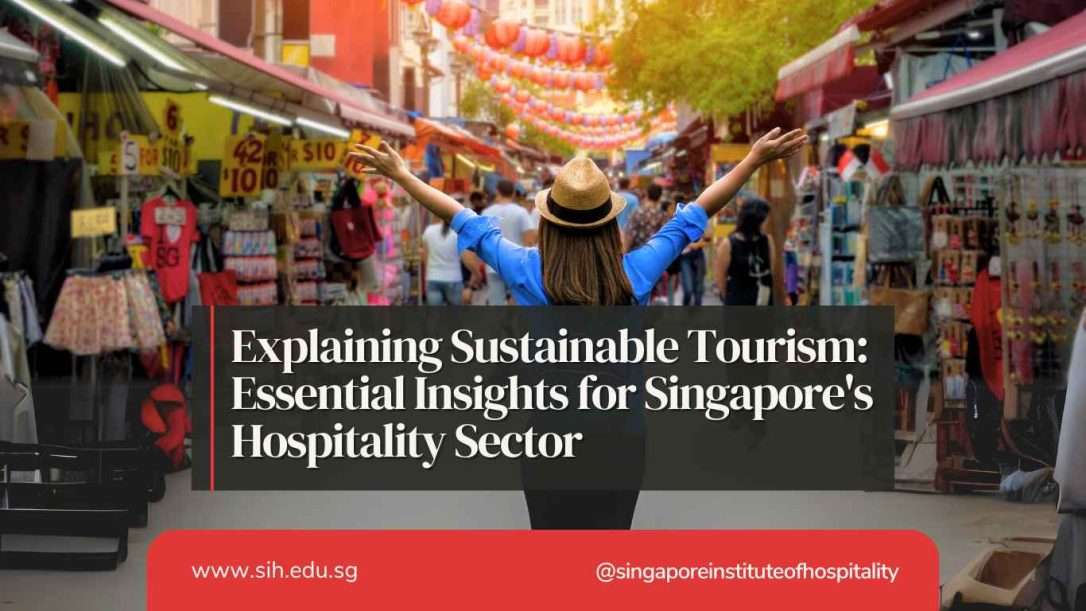

Sustainable tourism is more than just a buzzword in today’s hospitality industry, driven by an increasing number of eco-conscious travellers and the growing need to address climate change. But what exactly does sustainable tourism mean, and why is it important for both travellers and hospitality professionals in Singapore? This article will explain everything you need to know, highlight its core principles, and explore what it means for hospitality businesses moving forward in a time of change, with a specific focus on applications and impact in a Singaporean context.
Defining Sustainable Tourism: More Than Just a Trendy Phrase
Sustainable tourism isn’t just about reusing towels or opting for paperless check-ins (though these certainly help). At its core, it’s an approach to travel and tourism that takes full account of its current and future economic, social, and environmental impacts. It’s about creating a balance between the needs of tourists, the environment, and the host communities.
In Singapore, this concept takes on added significance due to the city-state’s unique characteristics. Imagine visiting a stunning urban oasis like Gardens by the Bay, where innovative sustainability practices are seamlessly integrated into a world-class tourist attraction. Or picture yourself staying at a hotel that not only offers luxurious accommodations but also actively contributes to local community initiatives and operates with minimal environmental impact. That’s sustainable tourism in action in Singapore.
The Three Main Focuses of Sustainable Tourism In Singapore

When we talk about sustainable tourism, we’re essentially looking at a three-legged stool. Each leg represents a crucial aspect that, together, support the weight of truly sustainable travel practices.
1. Environmental Sustainability
This focus is perhaps the most obvious, and in Singapore’s context, it’s particularly crucial given the limited land and natural resources. It’s about minimising the negative impact of tourism on the natural environment. This includes:
- Reducing carbon emissions
- Conserving water and energy
- Protecting biodiversity
- Managing waste effectively
For example, Marina Bay Sands, one of Singapore’s iconic hotels, has implemented numerous environmentally friendly initiatives, including a massive solar panel installation and an intelligent building management system to optimise energy usage.
2. Social and Cultural Sustainability
Tourism should not come at the cost of local cultures and communities. In Singapore’s multicultural society, this focus ensures that:
- Local communities benefit from tourism
- Cultural heritage is preserved and celebrated
- Tourists respect local customs and traditions
- There’s meaningful interaction between tourists and locals
The Chinatown Heritage Centre, for instance, not only preserves and showcases Singapore’s cultural heritage but also employs local guides and supports local businesses, exemplifying social and cultural sustainability in tourism.
3. Economic Sustainability
While making money is important, economic sustainability in tourism is about ensuring that the economic benefits are distributed fairly and support long-term development. In Singapore, this means:
- Creating stable, long-term employment for locals
- Supporting local businesses and supply chains
- Investing in community development
- Ensuring fair wages and working conditions
Singapore’s hawker centres are a prime example of this principle in action. These bustling food courts not only offer authentic local cuisine to tourists but also provide livelihoods for many local food entrepreneurs.
Why is Sustainable Tourism Important?
The importance of sustainable tourism for Singapore cannot be overstated, and here’s why:
Preserving Our Limited Resources
As a small island nation, Singapore has limited natural resources. Sustainable tourism practices help preserve these precious resources for future generations.
Protecting Local Cultures
Singapore’s rich multicultural heritage is one of its biggest attractions. Sustainable tourism helps preserve and celebrate this diversity.
Enhancing Visitor Experiences
Sustainable practices lead to more authentic, enriching experiences for travellers, which is crucial for Singapore to maintain its position as a top tourist destination.
Economic Benefits
Tourism is a significant contributor to Singapore’s economy, accounting for about 4% of its GDP. Sustainable tourism practices ensure these economic benefits continue in the long term.
Future-Proofing the Industry
As travellers become more environmentally conscious, sustainable practices are becoming a necessity for businesses to remain competitive and relevant in the global tourism market.
The Five Pillars of Sustainable Tourism
While we’ve covered the three main focuses of sustainable tourism, some models expand this into five pillars for a more comprehensive approach. Let’s explore these in the context of Singapore:
- Governance: This pillar emphasises the need for effective, transparent management of tourism resources and activities. Singapore’s efficient governance structure provides a strong foundation for this.
- Environmental Sustainability: This involves minimising the negative impact on Singapore’s urban environment and green spaces. The Singapore Green Plan 2030 provides a roadmap for this pillar.
- Social Sustainability: This pillar focuses on preserving and benefiting local communities, which is crucial in Singapore’s densely populated urban environment.
- Economic Sustainability: Ensuring fair distribution of economic benefits from tourism, which is vital for Singapore’s economy.
- Cultural Sustainability: Specifically focusing on preserving and promoting Singapore’s diverse cultural heritage.
What is the Meaning of Sustainable Travel in Singapore?
Sustainable travel in Singapore is about making conscious choices that minimise negative impacts and maximise positive ones when visiting the city-state. This could mean:
- Choosing accommodation with strong environmental policies, such as those certified under the Singapore Green Hotel Award scheme
- Using Singapore’s efficient public transport system or cycling instead of taxis
- Eating at local hawker centres that source ingredients locally
- Respecting local customs and learning a few words in Singapore’s official languages
- Participating in community-based tourism initiatives, such as guided tours of local neighbourhoods
Sustainable travel in Singapore is about being a responsible guest, not just a tourist. It’s about experiencing the city’s unique blend of cultures and ultra-modern attractions while ensuring they remain for future visitors to enjoy.
Singapore’s Sustainable Tourism Initiatives and Regulations
Singapore has kickstarted initiatives and regulations to promote sustainable tourism:
- The Singapore Tourism Board’s (STB) sustainability strategies outline the government’s commitment to sustainable tourism development.
- The Singapore Green Plan 2030 includes measures that impact the hospitality sector, such as targets for energy efficiency and waste reduction.
- The Hotel Sustainability Roadmap, launched by the Singapore Hotel Association (SHA) and Singapore Tourism Board (STB), provides a framework for hotels to enhance their sustainability practices.
- The Visit Singapore | Green Certified Stays web page recognises hotels that have adopted green practices in their operations.
Case Studies: Sustainable Tourism in Action in Singapore
Gardens by the Bay
This iconic attraction is a prime example of sustainable tourism in Singapore. Its Supertrees harvest solar energy, and the park uses a smart irrigation system and horticultural waste to generate energy.
Sentosa Island
Sentosa has implemented numerous sustainability initiatives, including a island-wide food waste management programme and the use of electric buses for transportation.
In conclusion, sustainable tourism is not just a passing trend, but a necessary evolution in how we approach travel, especially in a resource-limited, densely populated city-state like Singapore. It’s about ensuring that the joy of discovering Singapore’s unique blend of cultures, cuisines, and ultra-modern attractions doesn’t come at the cost of the city’s resources or its people. Whether you’re planning your next visit to Singapore or managing a hospitality business here, embracing sustainable tourism principles is key to ensuring that the Lion City remains a world-class destination for generations to come.
If you want to stay at the forefront of hospitality and are looking to renew your career qualifications, be sure to visit our SkillsFuture eligible courses here!
📞 For more information on how Singapore Institute of Hospitality can help you achieve your dream hospitality career, reach out to us at +65-9274 8177 or ✉️ info@sih.edu.sg.